
March 2026
The concept of quality can be defined in different ways. It is a word frequently used in investing, but often without a clear degree of precision.
At Pembroke, we describe ourselves as investors in quality growth businesses. This description is intentional, but it does not imply that the concept of quality has a single form. Competitive advantage can take different shapes, even within the same industry.
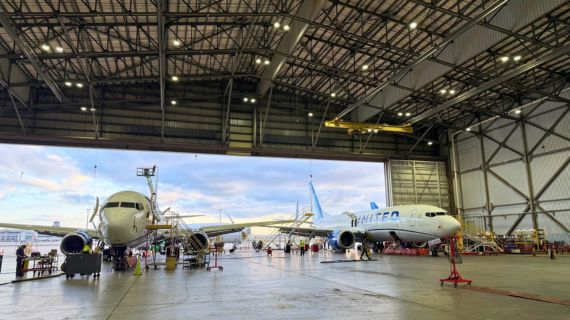
In January, we travelled to Miami to deepen our understanding of the aerospace aftermarket ecosystem. Over two days, we met with several suppliers, including AAR Corp and VSE Corporation, both holdings in our U.S. growth strategy.
The objective was not to test a single hypothesis. It was part of what we often describe internally as “constant polling”—refining our understanding of where durability truly resides. The trip reinforced that quality is contextual.
QUALITY EMERGING FROM INDUSTRY STRUCTURE
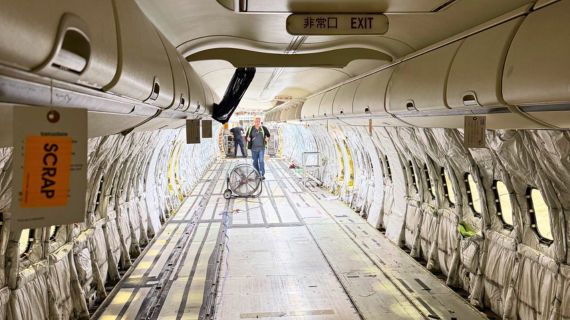
AAR Corp (NYSE: AIR) is an independent aviation services company that helps airlines keep aircraft flying. It performs heavy maintenance on aircraft bodies and components, and manages the parts required to support those fleets. Airlines rely on companies like AAR when internal capacity is insufficient or inefficient.
Heavy airframe maintenance has not always been viewed as a structurally attractive segment. Labour is the dominant cost, and historically airlines held negotiating leverage. What we observed in Miami suggested that balance has shifted.
The company’s two newly constructed hangars are fully booked for multiple years with existing customers. Major airline contracts extend well into the next decade. This is not a short-term backlog: it reflects airlines securing scarce capacity in advance.
The constraint is skilled labour. The facility employs hundreds of technicians, many certified by the Federal Aviation Administration (FAA), and management is actively working with local colleges to build a labour pipeline. Training for heavy maintenance roles is measured in months rather than years, but retention and operational discipline are central to performance.
Teams remain focused on specific aircraft types to improve efficiency and reduce turnaround times. In a labour-constrained environment, consistent execution becomes a competitive advantage.
Pricing dynamics reflect the current structural change. Airlines performing maintenance internally often do so at higher labour costs. Contracts now commonly include annual escalation clauses. In a market that has shifted from excess capacity to scarcity, established operators have regained bargaining power.
This does not remove risk. Labour retention remains an ongoing challenge. Lower-cost geographies continue to compete for maintenance activity. Cyclicality remains inherent in aviation.
However, being on site clarified that AAR’s durability does not rest on technological differentiation. It rests on operating competence within a constrained industry. This moat may not be the widest in aerospace, but it is directionally strengthening as supply remains limited.
Quality here is structural and operational.
QUALITY ROOTED IN TECHNICAL BARRIERS
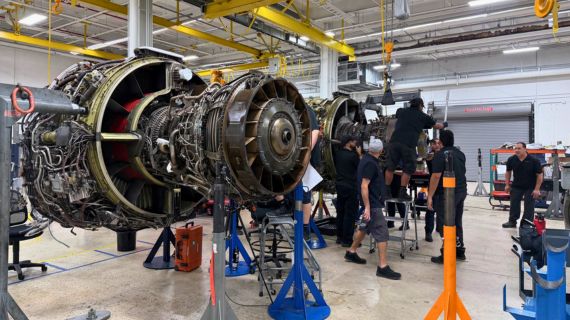
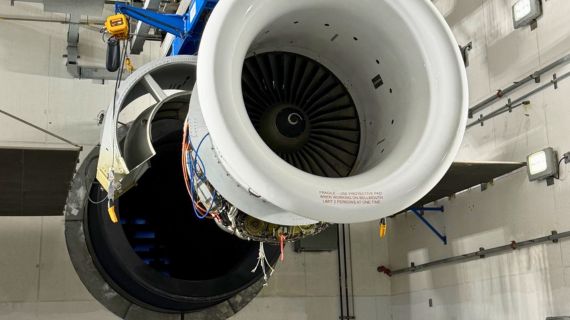
VSE Corporation (NASDAQ: VSEC) also operates in the aerospace aftermarket, but its focus differs. The company specializes in engine-related maintenance and component services, along with distribution programs for replacement parts that often align directly with original equipment manufacturers (OEMs).
The barriers are of a different nature. Engine test facilities are capital intensive. Technicians progress over years before leading complex overhauls. The training curve alone slows the addition of new capacity. Certification further limits competition. For certain engine platforms, only a small number of authorized partners exist. Participation in that ecosystem requires performance, compliance, and ongoing investment.
VSE’s strategy has been to align with OEMs, helping manage and monetize aftermarket programs rather than competing against them. That positioning reinforces relationships and supports structurally higher margins. However, this model carries risks of its own. OEM parts availability can constrain throughput. Working capital must be managed carefully. Acquisition discipline is critical.
Being on site clarified the magnitude of these technical and certification hurdles. Reading that barriers exist is different from understanding concretely how slowly capacity can expand. Scarcity is embedded in training timelines, capital intensity and OEM oversight.
Quality here is technical and structural.
SAME INDUSTRY, DIFFERENT DEFINITIONS
Both AAR Corp and VSE Corporation serve the same end market: keeping aircraft operational. Both benefit from long-term growth in global air travel. Yet their sources of durability differ. AAR’s strength lies in disciplined execution within a labour-constrained system where industry dynamics have improved. VSE’s strength lies in certification, capital intensity and technical expertise that limit competitive entry.
The distinction matters because the concept of quality is not a checklist. It is an assessment of whether competitive advantages are likely to persist under varying conditions. Travelling to Miami did not dramatically alter our investment theses. It sharpened them. It made visible which advantages are structural, which are cyclical, and which depend on continued execution.
When examined closely, the concept of quality takes many forms. Our responsibility as active managers is to define quality in the context of an operating business, and to test whether it can endure.
Other Articles Of Interest
Disclaimer
This report is for the purpose of providing some insight into Pembroke and the Pembroke funds. Past performance is not indicative of future returns. Any securities listed herein, are for informational purposes only and are not intended and should not be construed as investment advice nor is it a recommendation to buy or sell any particular security. Factual information has been taken from sources we believe to be reliable, but its accuracy, completeness or interpretation cannot be guaranteed. Pembroke seeks to ensure that the content of this document is correct and up to date but does not guarantee that the content is accurate and complete and does not assume any responsibility for this. Pembroke is not responsible for decisions or actions taken or made on the basis of information contained in this document.
